Showing posts with label Pilot plant. Show all posts

Thursday, 9 February 2017

The Growth Trajectory of Industrial Agitators


With the demand growing for agitators from the chemical industry, the industrial agitators market has witnessed a growth spurt. This apart, with technology taking massive strides, there has been an increase in the acceptance and use of industrial agitators. This has accelerated the growth of the industrial agitators sector.
However, it should be noted that the main restraining factor for the industrial agitators’ market growth is the cost of maintenance and installation.
The space for top-mounted agitators may witness a growth spurt in the coming years. The fact that top-mounted agitators are used in pressurised and atmospheric tanks in the pharmaceutical, cosmetic and food and beverages sectors, among others, there could be a spike in traction in the market.
Also, installing top-mounted agitators is comparatively easier as compared to bottom-mounted and side-mounted agitators. read more..

Why Pet Packging Is The New Rage

PET bottles have been around for many years now, in fact it has been manufactured for close to 42 years, globally. It should be noted that lead, cadmium, chromium, mercury and arsenic are not required when manufacturing PET bottles or resin. Since these are not used, the packaging is a safer alternative.
Also, PET does not contain phthalates of any kind. It should also be noted that colorants used in pharma PET bottles are FDA-compliant. Therefore, PET conforms to a number of regulations on colorants for food contact materials.
If a comparison is made between PET and pharma glass bottles, then PET is the more environment-friendly one. PET is devoid of hazardous substances. Also, no leachants cross the permissable limits. In addition, Lead (Pb) leaches out less from PET bottles as opposed to glass variants. read more


Tuesday, 24 January 2017

Providing Protection against Corrosion


Why is there a need for corrosion-resistant coating? It helps protect metal against degradation that results due to moisture, oxidation, salt spray or exposure to industrial or environmental chemicals. Corrosion-resistant coating provides additional protection to metal surfaces and prohibits contact corrosive materials and chemical compounds.

What are some of the benefits?
Corrosion-resistant coatings serve a purpose as they ensure metal components last longer than the time span they are given. Considering metal component operate in harsh applications, these corrosion-resistant coatings provide like no other. including Some of these coatings are made from the unique fluoropolymer coating which acts as a protection against extreme chemical applications for a long time, thereby ensuring proper functioning for a long period of time.Some of the corrosion-resistant coatings available include corrosion resistant steel coatings, that helps match the performance requirements of an application.

Global demand
Corrosion and its various forms costs the global economy $3 trillion per year. The present world market size corrosion-resistant coatings has crossed the $12 billion mark. With an increasing demand for mining and energy resources, the market growth is expected to be around 4.5% per annum.
Also, there has been a growth in nanocoatings owing to their ability to provide chemical and abrasion resistance with excellent adhesion, while also meeting regulatory requirements. Some of the main growth markets include water filtration and treatment, wind turbine coatings and oil and gas pipeline coatings.
It should also be noted that there is a burgeoning market for budget-friendly non-epoxy-based corrosion-resistant coatings. These coating are in demand because they provide protection against temperature swings, road salt and acid. Therefore, metals that come in contact with this kind of corrosive materials could do with some added coating.


Australia’s vanadium project breaks new ground


Australian Vanadium (AVL) has been successful in producing its first batch of vanadium electrolyte from its commissioned pilot plant at the University of Western Australia.This is another milestone for AVL’s energy storage plan as the product has the potential to be used in vanadium redox flow batteries (VRBs). What are VRBs? They are energy storage devices that have been designed to store energy generatedfrom renewable sources.
However, the company does not plan on stopping there. The proposal for a larger plant will be studied to assess its feasibility. The company plans to deliver vanadium products like batteries to end users, while also supplying and processing raw materials from the Gabanintha vanadium project in Western Australia.
The journey
The company has been using the pilot plant to test and verify the manufacture of vanadium electrolyte products that are deemed suitable for third party VRB. The company plans to supply vanadium electrolyte to VRBs that are being sold in Australia, New Zealand, and other Pacific and Asian countries.
However, ASL has also been approached by European battery manufacturers who seek electrolyte supplies for the long term. A number of additional vanadium electrolyte batches will be analysed and produced over time. Before that step, the company intends to gather information from the testing, which includes reviews by vanadium battery manufacturers and researchers.
By successfully installing the pilot plant, the company has taken a leap in the right direction as far as its strategy is concerned to become a player in the vanadium market. The development of a commercial plant in Australia is in sync with the company’s strategy to involve investors in the energy storage value chain, while also providing cash flow opportunities.


Thursday, 8 December 2016

Pilot Plant to Drive Ox-Combustion Carbon Capture


In a bid to push forward the commercialisation of a first-of-its-kind carbon capture technology, a thermal facility will test a way to capture CO2 emissions from coal-fired power plants. It will soon start operations in Ottawa, Canada.

The project is being jointly undertaken by the US Department of Energy and Natural Resources Canada. Both countries will come together to test oxy-fired pressurised fluidized bed combustion (oxy-PFBC). Officials from both countries believe the new process will be able to capture CO2 economically and efficiently, as opposed to other technologies. If the pilot plant results are successful, it will help boost the oxy-PFBC process to commercial use.

It is based on the oxy-fuel combustion process, which makes use of pure oxygen as opposed to air in the mission to burn fuel and manufacture heat. [Read more.....]

Pharmaceutical Packaging with a Twist


A number of renowned pharmaceutical customers are opting for innovative primary packaging products to meet their global requirements. In fact, a number of companies are offering pharma glass and plastic packaging products that are registered with the FDA. These innovative packaging products have been manufactured according to stringent quality parameters to ensure longevity and client satisfaction.
Plastic and glass rank among the best, and primary packaging material choices for liquid and solid dosage pharmaceuticals. Therefore, it becomes necessary for companies to produce pharma glass and plastic packaging that meets requirements.  

In addition to ensuring durability, most of the packaging comes in interesting shapes and sizes. Therefore, these companies are also about providing visual appeal, in addition to functionality. [Read more...]

Friday, 2 September 2016

Why the Shift from Pharma Glass to Plastic?

Why the Shift from Pharma Glass to Plastic?

Pharmaceutical packaging  has undergone a shift in market preference, with manufacturers preferring plastic to pharma glass. This is the case primarily with the injectable devices segment. The change in preference has triggered a recent shift in product portfolio of certain renowned parenteral packaging supplier companies. This has been done to meet market demand.

A number of important tests were carried out to ascertain if it would be feasible to shift shifting from pharma glass to plastic.

 The factors that influenced the shift to plastic include: -
One of the primary reasons that triggered the shift includes advancements in the drug formulation stage. This led to an increased drug complexity as well as quality challenges that arise due to the use of glass, which includes breakage, delamination , in addition to siliconization, among other factors. The problems that glass face have also proved to be a cause of concern for pharma players’ injectable drug’s packaging procurement. Why is it a problem? It can be attributed to the supply base, which is characterized by long term contracts.

Here are some of the main reasons why parenteral packaging is necessary:
Drugs are administered primarily through intravenous, intradermal or the intra ocular formats - called parenteral drugs. These drugs differ from conventional oral and extra dermal drug intake. Parenteral drugs help to cure diseases like cancer, rheumatoid arthritis and diabetes and other diseases. Therefore, in these cases, injectable is an effective method of administration.

 Also, parenteral packaging is among the fastest growing pharmaceutical packaging formats. Therefore, the shift to plastic does not come as a big surprise. In fact, Industrial Agitators for the pharmaceutical industry have helped the sector boom. These industrial agitators are used for a number of mixing operations.  

Thursday, 28 July 2016

The Change in Preference from Pharma Glass to Plastic

Pharmaceutical packaging has witnessed a significant shift in the market preference – from Pharma Glass to plastics. This is especially true in the injectable devices segment. This change in preference has also led to a recent shift in the product portfolio of a few renowned parenteral packaging supplier companies in order to meet the market demand. There were significant tests carried out in companies’ pilot plant to assess the feasibility of shifting from glass to plastic.

What were some of the factors that influenced the decision to shift to plastic? -

 Some of the main reasons driving the shift include recent advancements made in the drug formulation stage. This has led to an increased drug complexity in addition to quality challenges faced by the use of glass, including delamination, breakage, and even siliconization, among other reasons. Therefore, the problems faced by glass have also proved to be major concerns for pharma players’ injectable drug’s packaging procurement. This is because the supply base is characterized by long term contracts.
Pharma glass


However, it is important to better understand why parenteral packaging is essential. Drugs are usually administered through the intravenous, intra ocular or the intradermal formats are referred to as parenteral drugs. These drugs are different from conventional oral as well as extra dermal drug intake. Parenteral drugs are used to cure disease including cancer, diabetes and rheumatoid arthritis, as well as other diseases. For these diseases, injectable are highly effective methods of administration. Therefore, Pilot Plants are testing the use of plastic as opposed to glass.

It is imperative to note that parenteral packaging is regarded as among the fastest growing pharmaceutical packaging formats. Therefore, the shift from pharma glass to plastic was not entirely a surprise. Parenteral package has a CAGR of 8-9% from 2014-19. The boost in demand is driven by lifestyle disease, ageing population in addition to increasing health awareness in countries like India and China. -

Friday, 24 June 2016

Advantage Pilot Plant to Ensure a Smooth Commercial Process

Why is a pilot plant important for research and development? Most processes are scale dependent, making a pilot plant an integral part of the commercial process. The transition from a small-scale operations to a large scale production plant can be a challenging process. In such cases, the transition needs to smooth, but the initial set-up can be difficult. 

A large scale production plant is usually built on information which has been gathered by smaller units. 
There could be variations in kinetics, with reactions not as per expectation.

A pilot plant can help minimize the risk of human error, making performing experiments easier. A pilot plant allows you to make authentic comparisons as well as aiding in producing products in small quantities. When produced in small quantities, studying the reaction process is easier. Samples can also be handed over to consumers. In fact, for a pharma glass company, testing glass before manufacturing in a pilot plant is always a good option. 

A pilot plant is useful as far as coming with estimates of mass balance. Companies will be able to yield proper estimates. Lab experiments usually yield erroneous mass balances because quantities are smaller. When it comes to large scale production, values are way higher. The plant allows for the production of specialty chemicals that could go down well with markets.

Pilot plant | Pharma Glaass
A pilot plant can help an industrial unit proceed from lab testing to a full fledged operation without too much of a risk associated.The economics of setting up a large scale production is taken care of as corrosion resistant products, which may be the case with pharma glass,  may not really sell well. 


Tuesday, 29 March 2016

The Packaging Material of Choice for your Pharmaceutical Business

Do you own a Pharmaceutical, Cosmetics, or a Food & Beverage business? If yes, than packaging is one of the key aspects of your customer experience. Especially if you operate in the pharmaceutical industry and end up working with jars, vials, cartridges, and ampoules, where protection from foreign particles is of prime importance. This is where Pharma glass becomes a packaging material of choice for many. If you are in the market for packaging glass or setting up a Pilot Plant, you should keep the following in mind:
Pharma Glass
Pharma Glass


Quality & Conformance of the Packaging Material

Depending on the sensitivity of your solutions/products, the packaging glass with an appropriate quality level should be used. Typically, a pharma glass conforming to the international ISO GMP 15378/ISO 900 standards is considered as base quality suitable for most operations. Then there are region specific standards, such as EU–Pharmacopoeia or US-Pharmacopoeia. With these conformance standards in place, you can be assured that the quality of the packaging materials will satisfy your requirements. 

Requirement of Further Treatment

Based on the methods used to manufacture packaging glass, the number of particles present in the glass may vary. Now, in most cases such particles may not interfere with your product. However, if your product is sensitive in nature and exposure to foreign particles should be at a minimum, such as in case of a Pilot Plant, then manufacturing methods of the packaging materials become important. Here, keep an eye out for manufacturers following the laminar-flow technology or conforming to ISO 8 (category 100 000) standards. These quality standards lets you know that further treatment of the packaging material is not required and can be used directly in sensitive apparatus of the Pilot Plant.  

Monday, 7 December 2015

The Benefit of a Pilot Plant in Speeding the Commercial Process

Have you ever asked yourself why you needs a pilot plant for research and development? In fact, a number of processes are scale dependent. It can be quite a challenging experience to transition from small-scale operations to a large scale production plant. The transition needs to be smooth but the initial setting up can be a big scare.

A huge production plant is sometimes built based on information which is gathered at the small unit. However, the kinetics may differ considerably and the reactions may not be up to par. However, sometimes the best laid plans may not go according to plan. The worst case scenario could be that uncontrolled heat build-up could lead to abnormal reactions and possible explosions even if some materials are corrosion-resistant.

This cannot be attributed to human error, rather it could be a process that went wrong. The process takes a different turn when there is a change. It is also not possible at times to forecast these problems as they may be too complex to comprehend. A pilot plant can be very helpful as far as minimising error is concerned. Therefore, experiments can be studied more thoroughly without posing a major risk. The pilot plant does not only provide data before increasing scale of production, it serves other function. This include:
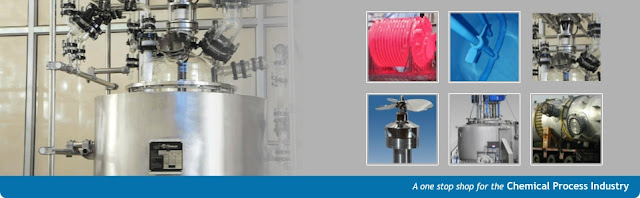
Pilot Plant
Corrosion resistant

1. It helps in making an authentic comparison with commercial grade raw material against the grade counterpart in the laboratory. During a lab study, the use of raw material and catalyst is not very big. Therefore, a highly pure grade can be used for the experiment. However, when it comes to a production plant, using pure materials would be feasible. Commercial grade material is best used.

2. The plant can be used for the production of small product quantities which can be used as raw material for market testing. The plant can be used to produce quantities which can be used to study the reaction process which might follow. It is one of the best ways to test a product in the real market. Samples can be handed out to customers to gauge their reactions

3. The quality of waste and by-products can be studied, in addition to assessing their saleability.

4. Waste generated can also be studied to determine if waste treatment is necessary. This will help understand the economics associated with the process.

5. A pilot plant will help come up with a more detailed mass balance. It will allow companies to give yield estimates. Lab experiments normally generate a sizeable number of erroneous mass balances due to the fact that quantities are much smaller. When it gets down to a full-blown production, the values are much higher.

6. A pilot plant will give you the liberty of producing specialty chemicals that may be appreciated by a more niche market. Therefore, it can safely be said that a pilot plant can help a business go from lab testing to high production plant faster without posing much of a risk. It also aids in keeping in focus the economics involved in setting up a large scale production because corrosion-resistant products may not translate to saleability.